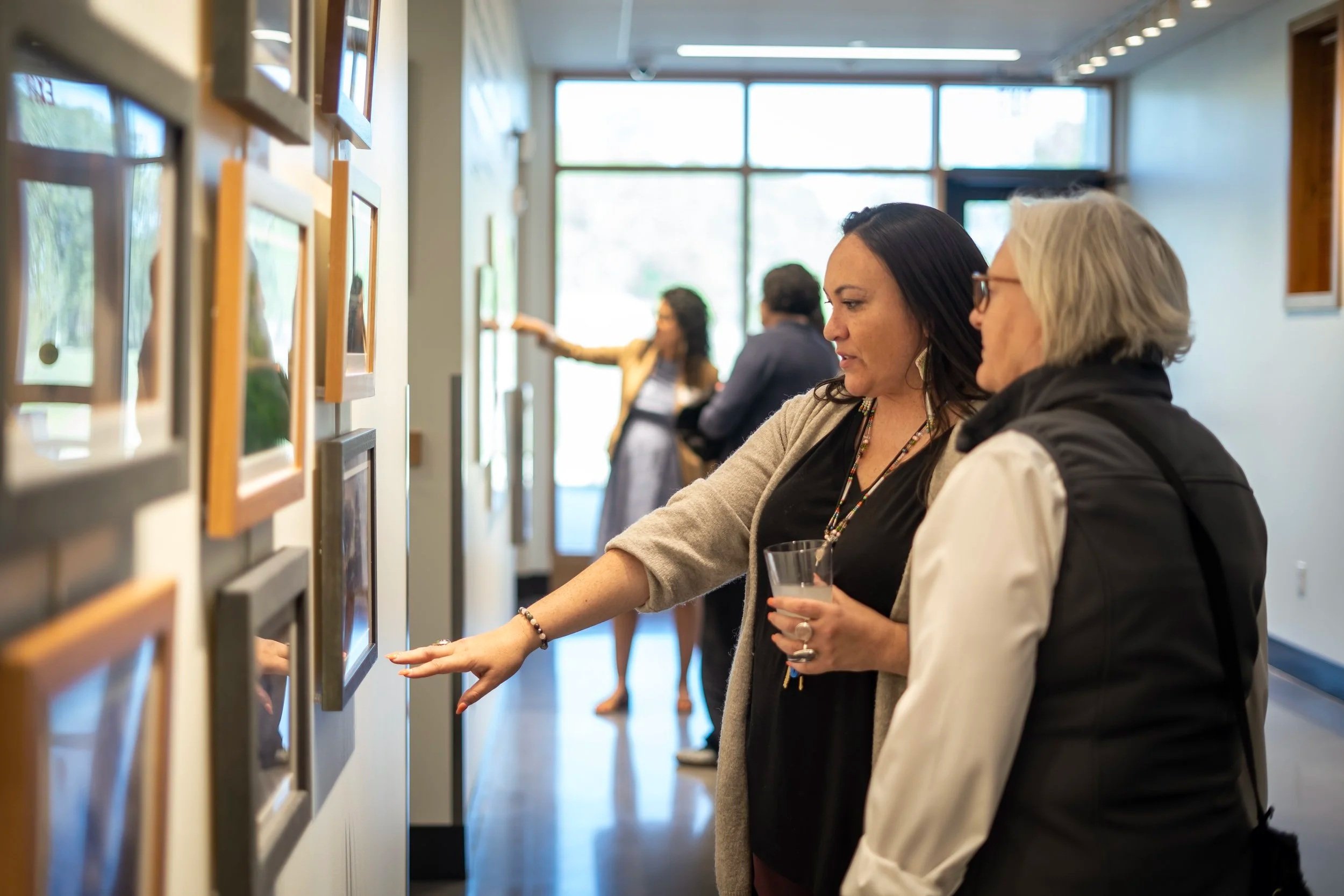
Exhibitions at the Waḳaƞ Ṭípi Center emphasize Daḳota culture and artists. WTA has both rotating and permanent interpretative exhibits at the Waḳaƞ Ṭípi center and throughout the sanctuary site. To stay in the loop for new exhibitions, sign up for our newsletter and follow us on our social media. For more information on exhibits and to express interest in displaying your work at the center, please contact Delia Touche at dtouche@wakantipi.org. You can download and view the digital exhibit guide, here.
A special thank you to the National Endowment for the Arts, Shakopee Mdewakanton Sioux Community, and Saint Paul Cultural Star Program for supporting Waḳaŋ Ṭípi Center exhibitions.
Rotating Exhibits
-
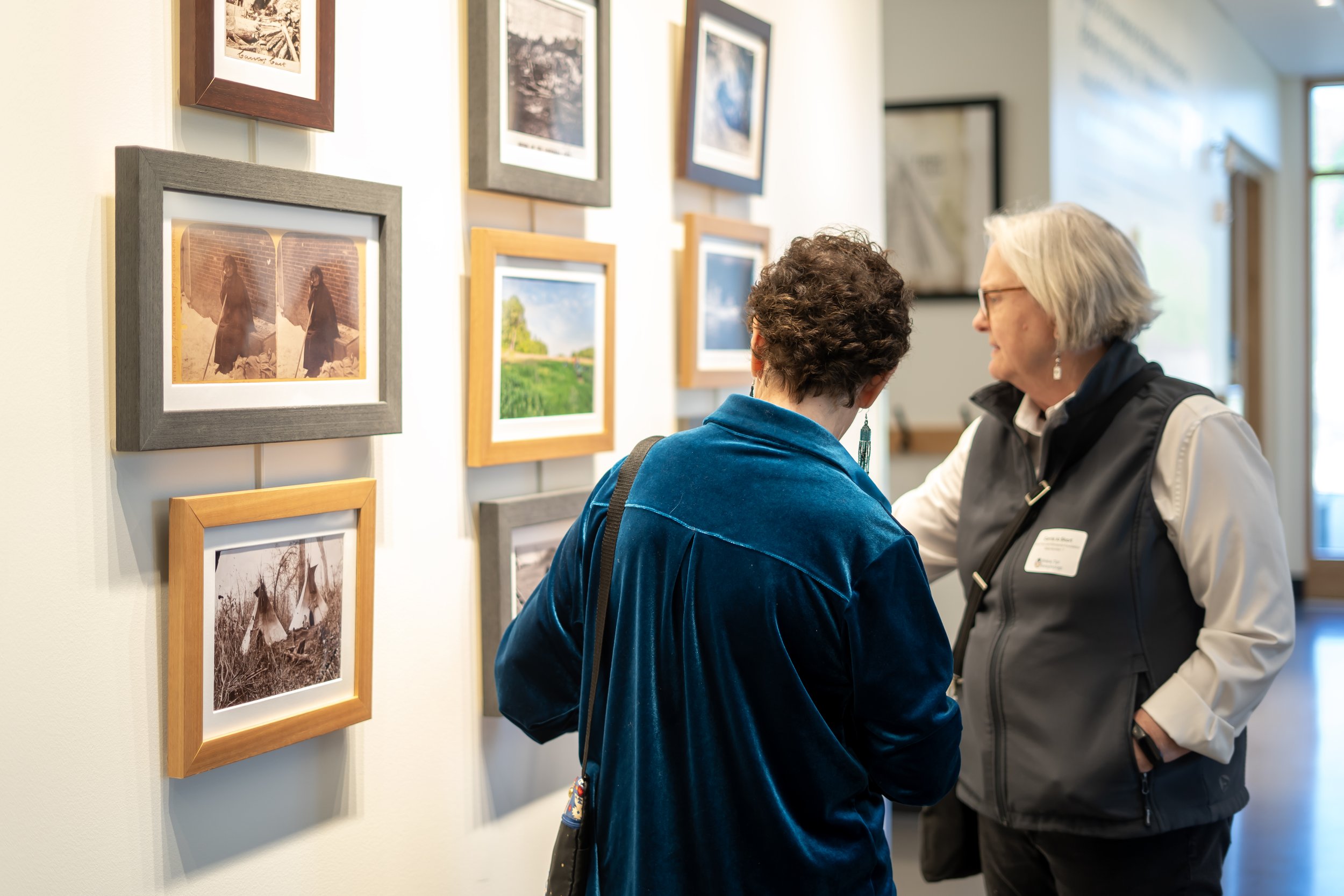
The gallery features a series of 17 photographs curated by Cole Redhorse Taylor. The photos come from WTA's archives, the Minnesota Historical Society, Library of Congress, Project 106, Saint Paul Globe and the Minnesota Star Tribune.
Ṭiwahe is a Daḳota word for immediate family. Taylor’s curatorial concept is rooted in caring for and treating the land as a relative. These images show the various transformations this sacred space has gone through. This land has come to know many characters that have had a hand in shaping its history. This exhibition tells us that no matter what community you come from, we all benefit from being in kinship and restoring the land. We are Tiwahe, a family united by place.
May 29, 2026 – April 25, 2027
-
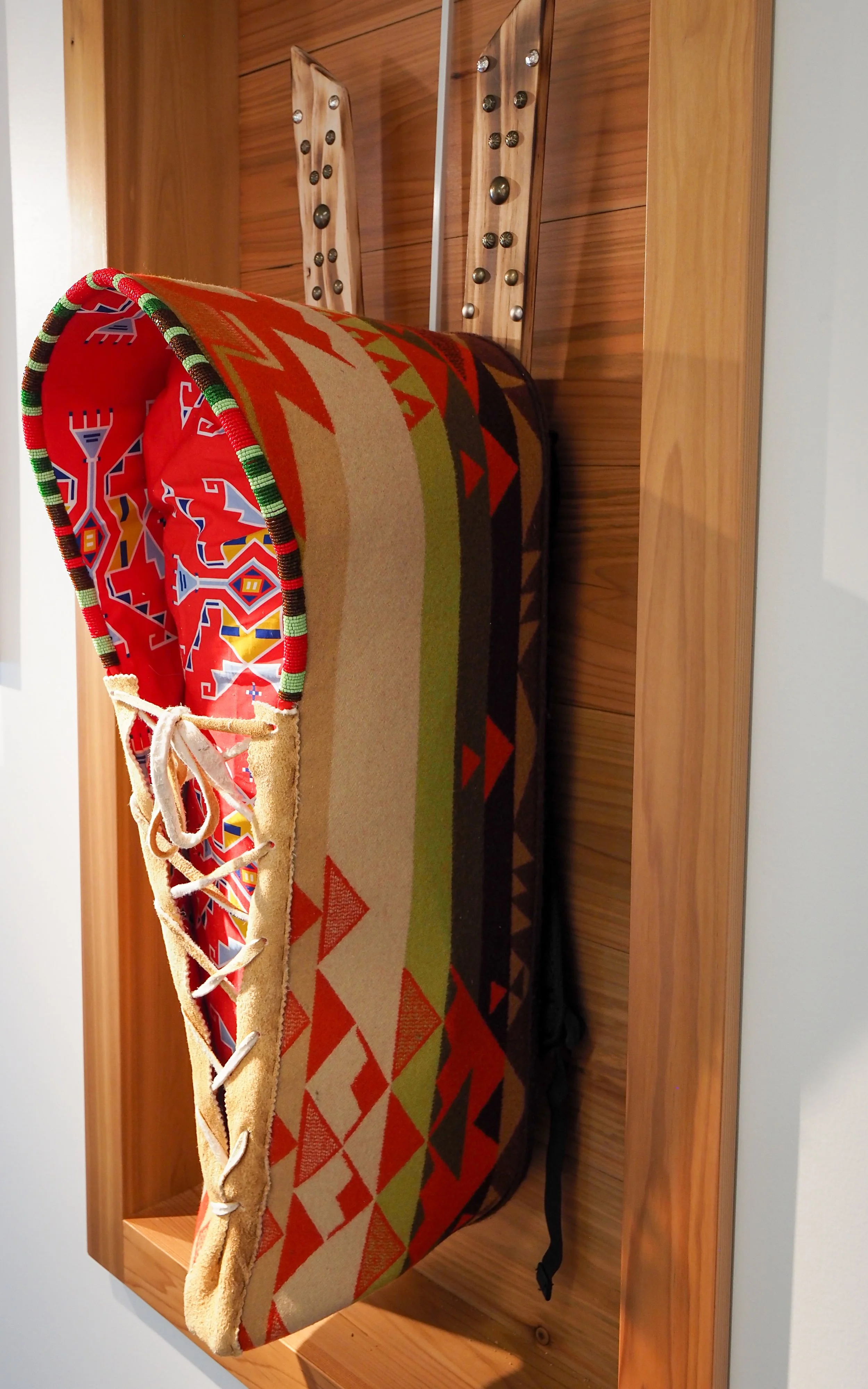
Wiƞyaƞ —Women— have always held profound power across Indian Country. Native women have long stood out at the center of artistic expression. Indigenous Women use art as a tool to carry on tradition, but also to evolve and transform them. Their work is the foundation of Native art, rooted in ancestral knowledge and carried forward through generations.
Within their work lives memory, kinship, and land. Each piece featured in this exhibit carries the power of survival, the power of adaptation, and the power of legacy. Their creations remind us of the value of women’s voices and perspectives. Stop in to see the works of Rubia Buck, Alayna Eagle Shield, Leah Thomas, and Thomasina Top Bear in Wiƞyaƞ, a Creative Force.
May 29, 2026 – April 25, 2027
Permanent Exhibits
Indoor
-
The Daḳota people understand their origins as the Wicaḣapi Oyate or Star Nation. Our teachings root us in the land and show us how our journey to Earth begins in the stars. They remind us of the sacred connection between Earth and Sky. This map was created in collaboration with Jim Rock, Indigenous educator and astronomer, and Upstream Exhibits. The Star Map highlights different constellations according to the astronomical seasons. Depending on what time of year you visit, different stars will be visible.
-
Wóokiye Wiŋ (Katie Bendickson) created this work to visually represent the organization of the Daḳota year, highlighting important activities that happened each month or moon cycle. She used her own lived experiences and perspective to visually portray the activities for each month. Every image is painted within a circle representing the full moon and the circle of life.
Wóokiye Wiŋ is a Sisseton Wahpeton Daḳota educator and multidisciplinary artist based in Minnesota. Much of her young life was spent on her mother’s reservation, Fond du Lac, in northern Minnesota before her family moved to her father’s reservation at Upper Sioux Community in southwest Minnesota.
Wóokiye Wiŋ connects her practice with the land by harvesting plant materials to make natural paints and dyes. She uses her Daḳota and Ojibwe culture within her work as a way of blending her creative practice with cultural tradition.
Dakota Moon Descriptions by Katie Bendickson - the moons Katie created are different from what we post on social media.
-
The medicine wheel is a sacred symbol that embodies the four directions, four seasons, and the four stages of life. The placement is meant to remind us of Kapemni or the sacred mirroring between the star world and the physical Earth. The medicine wheel is used to mark sacred sites, places of teaching, and celebration.
This medicine wheel placement marks the spot for two important ceremonies that took place during the development of the center. The first ceremony was the land acknowledgement ceremony, Uƞci Maḳa Wóabezapi on Indigenous Peoples Day in 2021. More than 300 community members offered tobacco at this very spot and voiced our intentions to the land for the Waḳaƞ Ṭípi Center.
In September of 2024, our staff, board, and steering committee gathered here for a Buffalo Heart Ceremony. In the same place, a buffalo heart with spiritual foods and medicine was buried. This offering to the earth was a prayer to protect this sacred place.
The work done here at Waḳaƞ Ṭípi Awaƞyaƞkapi has always been guided by ceremony and prayer.
-
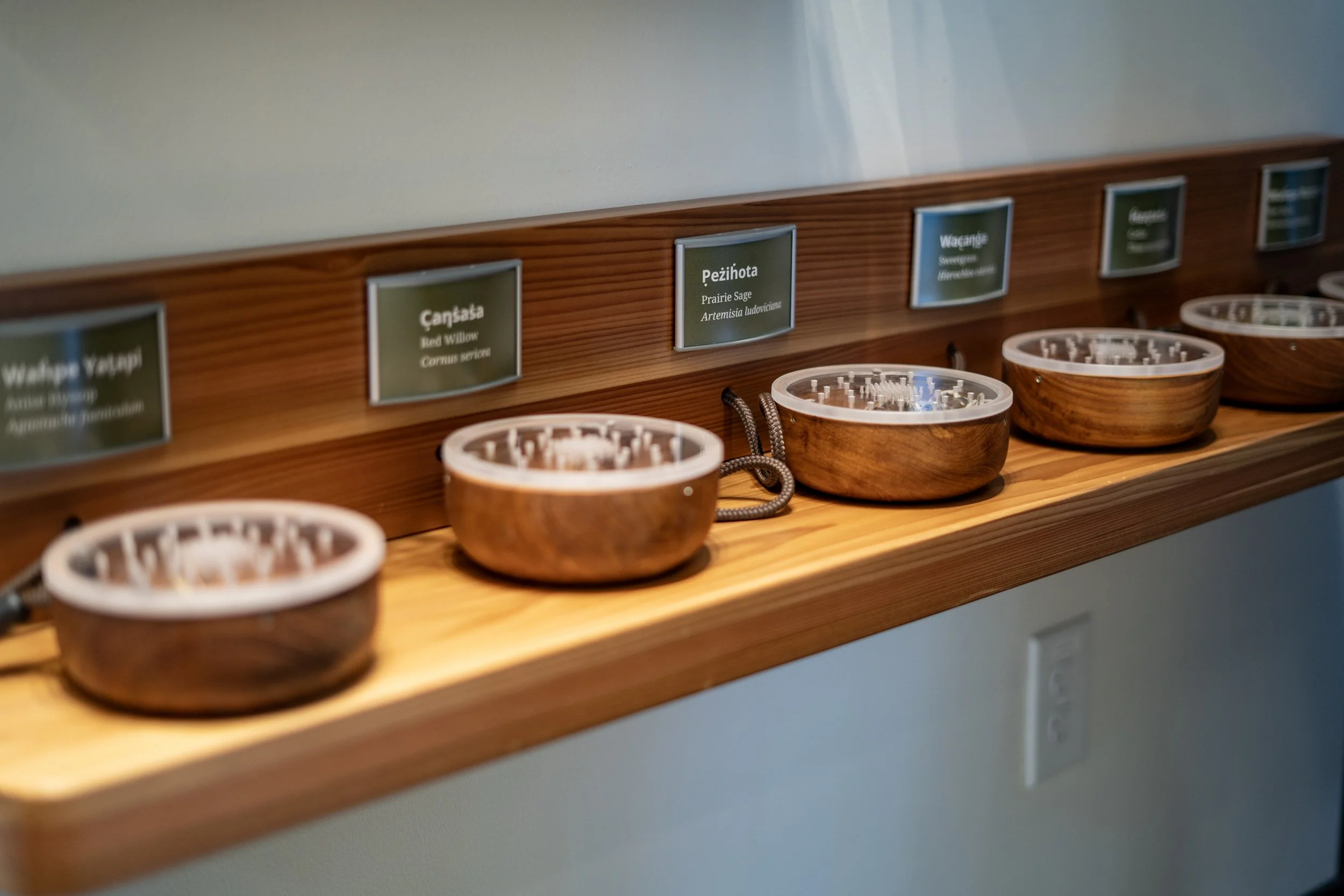
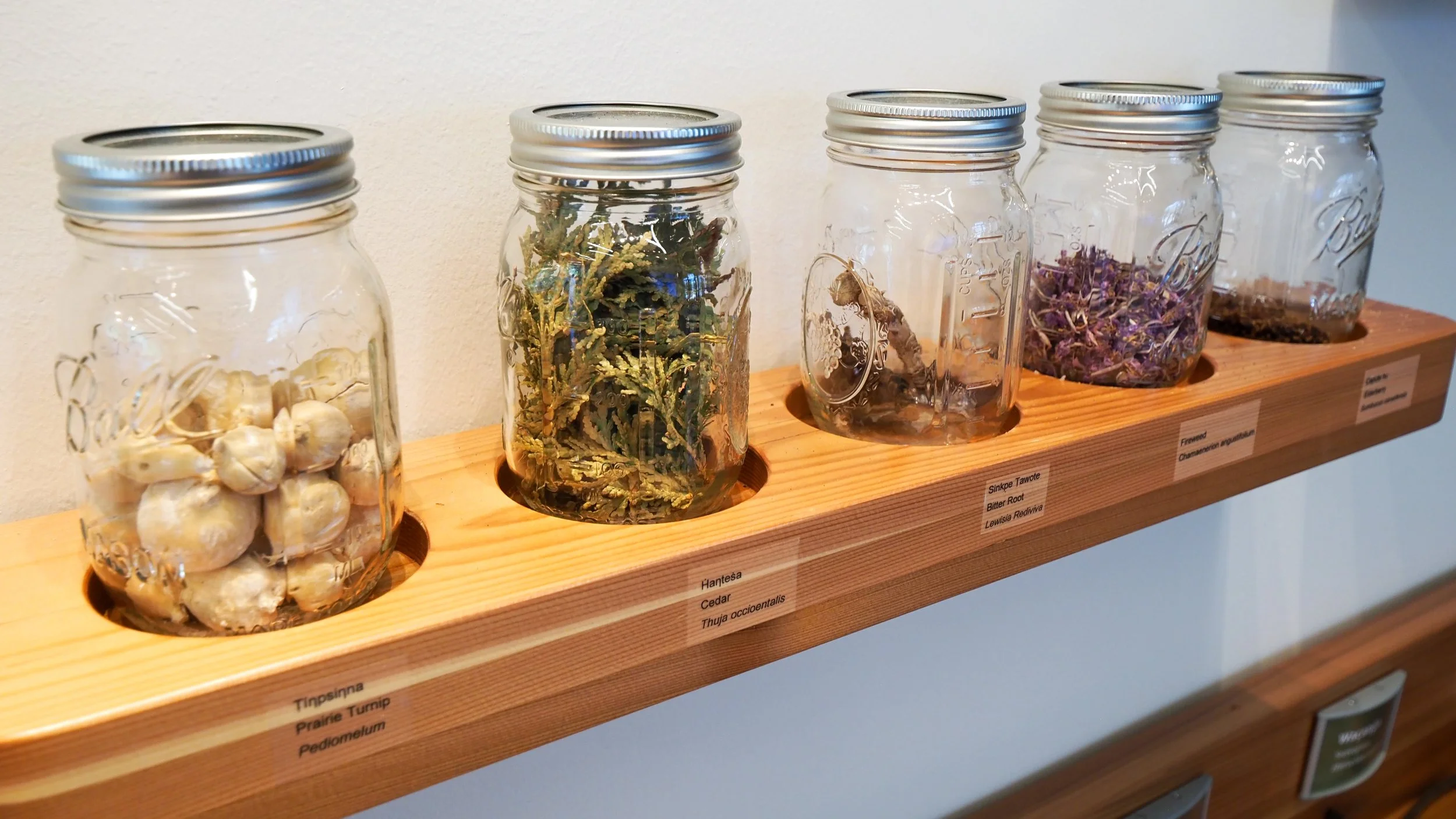
Daḳota people understand the plant nation as our elder relatives. They were here before us, and we have much to learn from them. We continue our ancestral reciprocal relationship with plants to this day by ensuring the well-being of plant communities; in return they offer us gifts of food, medicine, and art forms.
The plants featured in this display were harvested from this site or gifted to us. The arrangement of the exhibit illustrates how plants can be processed and stored. In the purple cone flower graphic, you can see how different parts of the plant have a purpose. The bowls on the lower shelf hold aromatic plant relatives that visitors are encouraged to engage with through smell.
-
This map of Mnísota Daḳota place names was illustrated by Paul Durand and included in his now out of print book Where the Waters Gather and the Rivers Meet: An Atlas of the Eastern Sioux. He referenced maps and notes that were created by Joseph Nicollet in the 1830s along with other early Euro-American explorers to the area.
These names were vetted by Dakota elders and language speakers. Dakota place names describe the natural features of the land or important things that happened there. They tell our stories and pass on our teachings. This map is a record of Dakota history and reminds us of the unsevered connection between the people and the land.
It is important to note that Daḳota people didn’t have “place names” in the sense that we do now in American society. One place may have multiple names that differ from community to community. They are all correct.
Outdoor
-
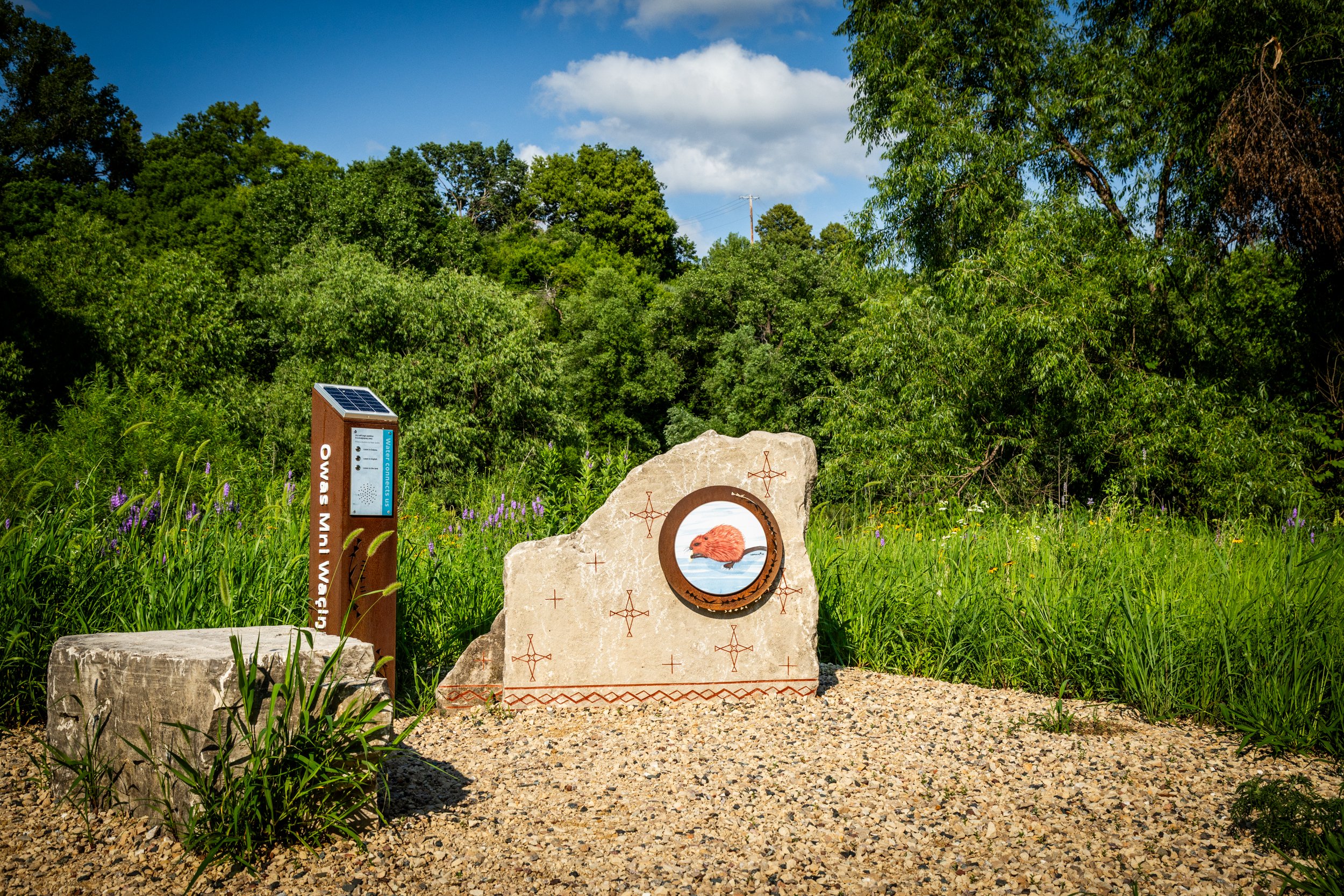
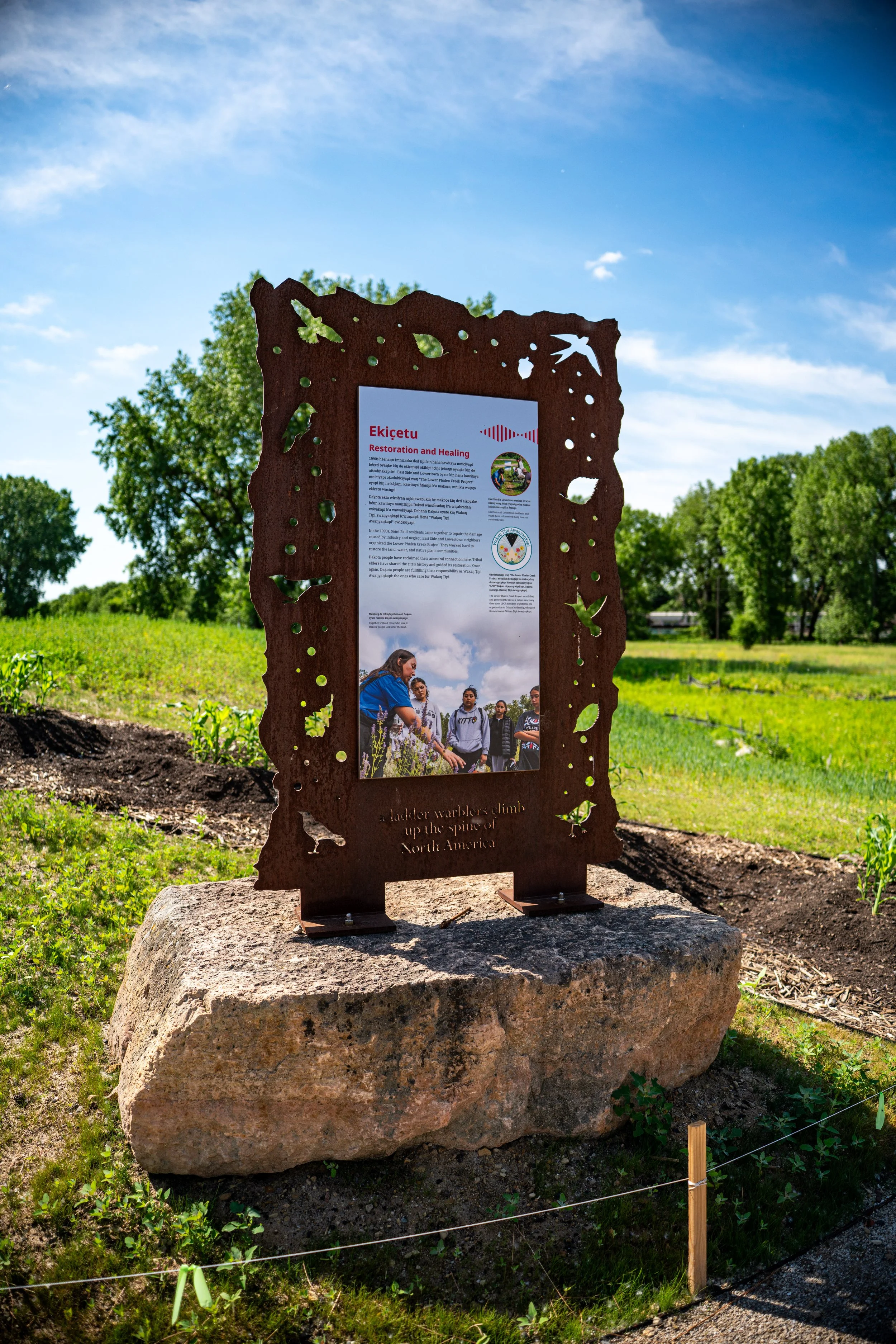
The teaching stones are a configuration of stacked limestone blocks that are etched with Dakota design elements. These stones feature original artwork created by Dakota artists. These are placed along the Wakan Tipi Center and trails to provide a space for rest, listening, and reflection. Some teaching stones have audio posts that feature stories from the land that are told in L/Dakota and English. People are invited to pause and attune themselves to their surroundings when they visit.
-
This mural located on the centers storage container was created by Thomasina Top Bear with the help of Native American youth who came together to share their thoughts and ideas on how this mural could visually represent the significance of Waḳaƞ Ṭípi and the restoration work that is done here.
-
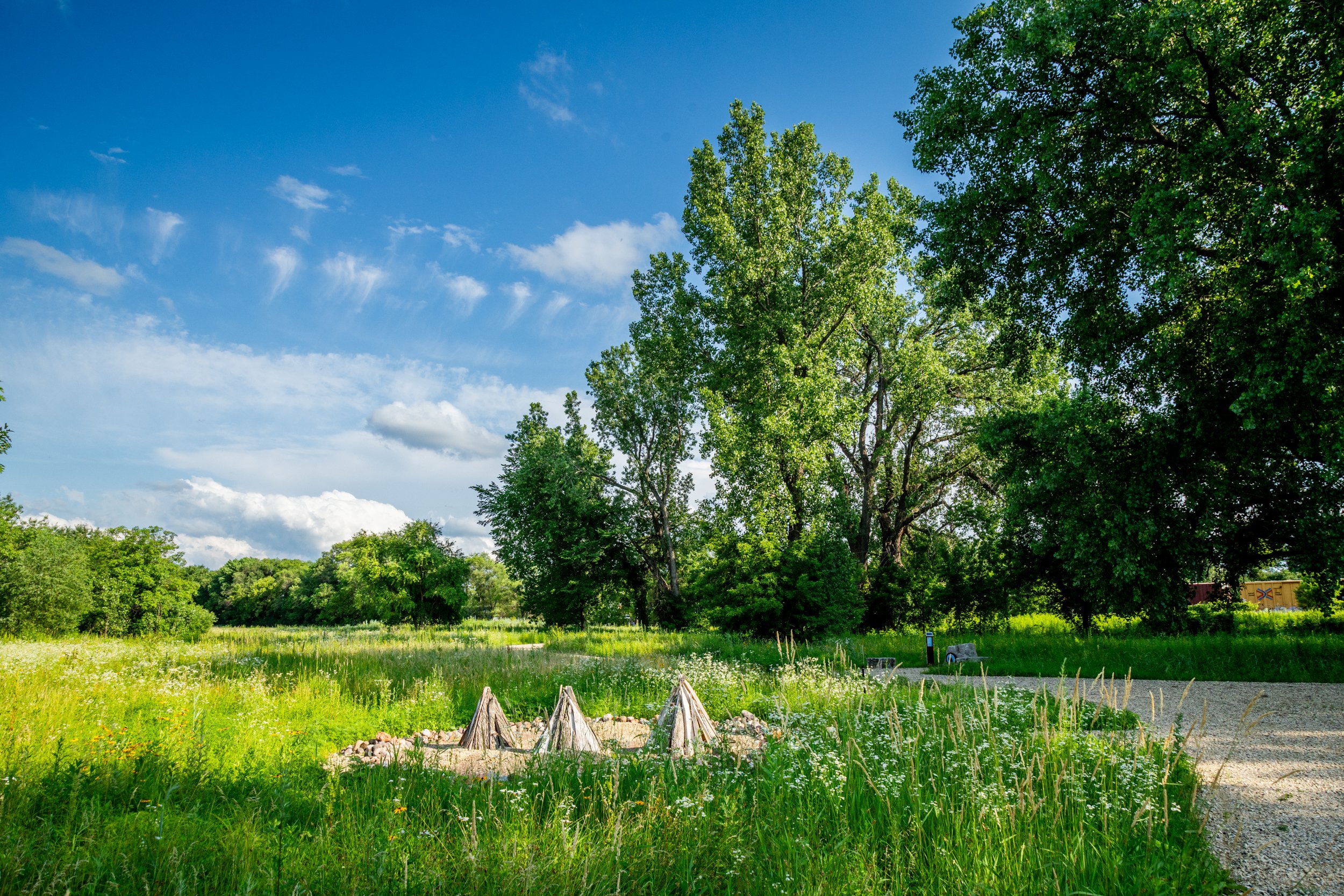
In 2025 this habitat was built by Twin Cities artist, Willard Malebear Jr. (Huŋkpapȟa Lakȟota, Standing Rock) in partnership with the University of Minnesota Bee Lab.
The three wooden ṭípi structures are positioned to mirror Tayamni C̣aƞkahu - the backbone of the Tayamni constellation (or, Orion's Belt). They are positioned in a sand pit on the back of a kéya (turtle). The various elements that make up this sculpture serve as habitat for different species of wic̣ayaẓipa.